



The European Court transfers the responsibility for the non-prosecution of crimes from the Prosecution to the Victims
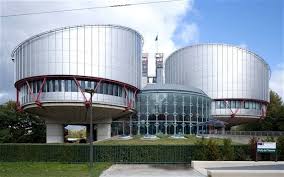
 One year after it rejected the application of former detainees from the Šljivovica and Mitrovo Polje camps, the European Court of Human Rights issued a decision on October 19 2017 declaring the second application, submitted on behalf of family members of the killed camp detainees, inadmissible. The Humanitarian Law Center (HLC), which represented the victims’ families in these proceedings, points out that the European Court re-used the same, factually unsustainable structure of reasoning in order to transfer the responsibility for the inactivity of war crimes prosecutions from the state to the victims themselves.

 The main trial before the War Crimes Department of the High Court in Belgrade in the Trnje case, which was scheduled for September 13 2017, was not held because the defendant Pavle Gavrilović did not appear before the Court, again, because he allegedly fell ill on the day of the trial. His absence was, as in previous occurrences, justified on the basis of medical records issued by the Military Hospital in Niš. The second defendant, Rajko Kozlina, used to use a similar tactics of absence from the trial, with the only difference that he received confirmation of hospitalization from the Belgrade Military Medical Academy. Both defendants are still
 More than a year after the adoption of the

 On June 21st 2017, the Humanitarian Law Center (HLC) filed a criminal complaint with the Office of the War Crimes Prosecutor of the Republic of Serbia (OWCP) against Radojica Božović, a former high-ranking member of the Red Berets, as well as against two other members of this unit, for crimes committed in Doboj (Bosnia and Herzegovina) in the period from May to August 1992.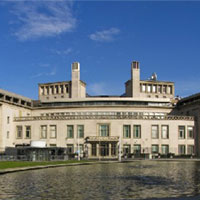
 The Chief Prosecutor of the International Criminal Tribunal for the former Yugoslavia (ICTY), Serge Brammertz, in his regular six-month address to the UN Security Council on 7 June 2017, presented a report in which he warned of a growing trend of denial and revisionism of court- established facts in Serbia and the entire region, as well as of the burning issue of the slowdown in the process of war crimes trials before Serbian courts, and the difficulties of regional cooperation between specialized prosecution offices. At the same session of the UN Security Council, the Serbian representative Čedomir Backović rejected any words of criticism and opposed Brammertz’s substantive objections by presenting the supposed statistical successes of the Serbian government that he represents. The signatories to this appeal demand that the Serbian authorities consider carefully the objections addressed to Serbia during the UN Security Council session, and deal with problems that have in recent years resulted in the growth of nationalism in society and a drastic deterioration in relations with the countries of the region.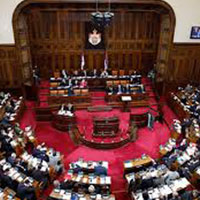
 On Monday, May 15th 2017, the National Assembly of the Republic of Serbia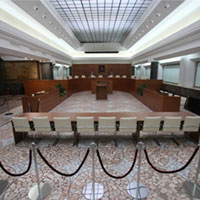
 The Serbian Constitutional Court has adopted a
 In March 7th and 8th, 2017, the Serbian delegation presented the Third Periodic Report on the Implementation of the International Covenant on Civil and Political Rights before the UN Committee for Human Rights in Geneva. The report contains data on the prosecution of war crimes in Serbia. During the
 On February 27th, 2017, it will be 24 years since the crime in Štrpci (BiH), in which members of the Republic of Srpska Army (VRS) kidnapped and killed 20 passengers on a train travelling from Belgrade to Bar, among whom were 18 Bosniaks, one Croat and one foreign citizen of African or Arab origin, whose identity has not been established. The Humanitarian Law Center (HLC), Women in Black, the Youth Initiative for Human Rights (YIHR) and the Sandžak Committee for the Protection of Human Rights and Freedoms would like to remind the public of the responsibility which lies on the institutions of the Republic of Serbia for this crime, as well as of the fact that the victims’ families are still waiting for justice from the courts in Serbia and for the recognition of their status as family members of civilian victims of war.