



First victims’ testimonies at trial for crime in Trnje

 The trial against an officer and a non-commissioned officer in the Serbian Army, Pavle Gavrilović and Rajko Kozlina, for the crime committed against a civilian population in the village of Trnje in March 1999, continued on Tuesday and Wednesday, October 27th and 28th, 2015, in Courtroom 2 of the Special Court. After the postponement of the previous five main hearings, victims and eyewitnesses of the crime will appear for the first time to testify in the trial session.



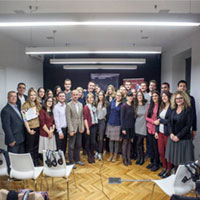
 A debate on the role of education in the process of dealing with the legacy of the violent past was held on October 22nd, 2015, in the Library of the Humanitarian Law Center (HLC). The participants in the debate were Sanja Petrović Todosijević, a historian from the Institute for the Recent History of Serbia, Daša Duhaček, a Professor at the Faculty of Political Sciences in Belgrade, the Deputy Executive Director of the HLC, Marijana Toma, and students of the fourth generation of the Regional School for Transitional Justice. The topics of the debate were the position of the educational system towards past human rights violations, the role of youth in reconciliation processes and non-institutional (informal) platforms for the provision of support to efforts to teach history on the basis of facts that have been established.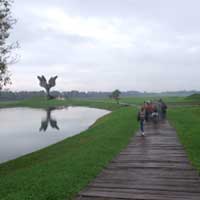
 A one-day visit to memorial sites in Croatia was organized as part of the study programme of the Regional School of Transitional Justice (School). Twenty-five students of the fourth generation of the School visited the memorial monument and the Jasenovac Memorial Museum and the Memorial Centre and memorial monument in Ovčara, near Vukovar. On this occasion, they talked about the culture of remembrance in relation to the crimes committed in these locations.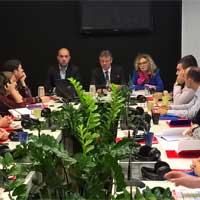
 On October 16th the Fourth Regional School of Transitional Justice (the School) opened in the Library of the Humanitarian Law Center (HLC). Those attending the School were welcomed by Mr. Jean-Daniel Ruch, the Swiss Ambassador to Serbia, Almin Škrijelj, Director of the Pravnik (Lawyer) Association of Bosnia and Herzegovina, and Marijana Toma, Deputy Executive Director of the HLC.
  On October 23th, 2015 the Humanitarian Law Center (HLC) will present the “Operation Reka” Dossier. The Presentation will take place at the Grand Hall of the Media Centre in Belgrade (Terazije 3, I floor) at 12,00 a.m.
 A side event dedicated to the fight against enforced disappearances in the OSCE region was held on Friday, 25 September 2015, as part of the annual Human Dimension Implementation Meeting of OSCE Participating States. The meeting, under the title of Combatting Enforced Disappearances in the OSCE Region – Progress and Way Forward, was organized by the Ministries of Foreign Affairs of Norway, Switzerland, France and the Netherlands. On behalf of the Humanitarian Law Center, Jelena Krstic presented the efforts to determine the fates of the people who went missing in the context of the armed conflicts in the former Yugoslavia in the Western Balkans region. The meeting was also attended by the Chairman of the UN Committee on Enforced Disappearances (CED), Professor Emmanuel Decaux, a professor at the Faculty of Law at the University of Oslo and former chairman of the UN Working Group on Arbitrary Detention, Mads Andenaes, and Bayram Shikhmuradov from Turkmenistan.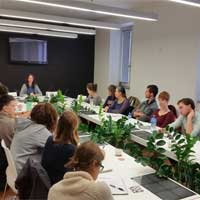
 Students of the School for International Training (SIT) visited the Humanitarian Law Center (HLC) on Tuesday, 29 September 2015. The students attend various universities in the US, and they are staying in Serbia as part of the SIT Peace Study Programme organized within the Center for Comparative Conflict Studies at the Faculty of Media and Communications.
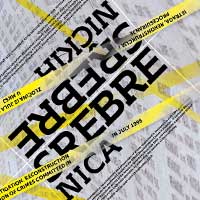 A documentary film entitled “Statement 710399” was shown last night in Belgrade Center for Cultural Decontamination. Following the screening there was a debate on the legacy of the genocide in Srebrenica, the possibilities of building trust and common remembrance, and the importance of court-established facts. Taking part in the debate were the film’s author and former spokesman for the International Criminal Tribunal for the former Yugoslavia (ICTY) Refik Hodzic, director of the SENSE – Center for Transitional Justice Mirko Klarin, a culturalist and activist from Banja Luka Srdjan Susnica, chief editor of the publishing house “Fabrika Knjiga” and columnist of the portal “Pescanik” Dejan Ilic and professor at the Faculty of Law of Union University in Belgrade Vesna Rakic Vodinelic.