



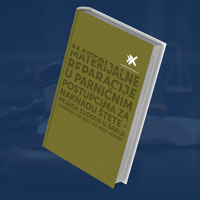
Material reparations in proceedings for damages – The practice of courts in Serbia 2021 – 2022
 For a long time, the Humanitarian Law Center (HLC) has been publishing reports on the exercise of the right to compensation for victims of war crimes, through civil proceedings conducted before the courts in Serbia. The last such report covered the period from 2017 to 2020 and was presented to the public in 2021. This report covers the period from 2021 to the end of 2022.
The obligation of the Republic of Serbia to provide redress to victims of human rights abuses, including in the form of adequate material reparations, remains unchanged. The harm inflicted on individuals and their family members implies the duty of the wrongdoer, the Republic of Serbia in this case, either to remove its harmful effects or to provide the victims with adequate redress. 30 years since the outbreak of the armed conflicts in the territory of the former Yugoslavia, the Republic of Serbia has not yet fully met this obligation. The political will to face and accept responsibility for past crimes and provide redress to all victims is still absent. As a result, the victims and their family members are forced to pursue their compensation claims through lengthy, costly and often uncertain civil litigation before the courts in Serbia.

 In order to establish the facts about the bombing of refugee columns on the territory of Bosnia and Herzegovina during the Croatian military-police Operation “Storm”, the Humanitarian Law Center (HLC) is publishing the data and excerpts from the witness statements about those events, which it collected immediately after the refugees’ arrival in Serbia.
 The HLC has monitored all war crimes trials conducted in the territory of Serbia in 2021, namely a total of 26 cases conducted before the War Crimes Departments of the Higher Court and/or the Court of Appeal in Belgrade. The Report provides a brief overview of the proceedings and of the HLC’s basic findings in respect of cases which are of public relevance. A large number of the war crimes cases covered by this Report have been going on for a number of years now, so that previous HLC annual trial reports are also relevant for a full grasp of the course of the proceedings and the pertinent HLC findings.
 Following June 1999 the Serbs in Kosovo have been having a hard time. After the withdrawal of the Serbian army and the police, they became the targets for the KLA and criminal groups. Numerous murders, abductions and property destruction happened in the presence of the international forces. The absence of KFOR’s reaction persuaded even those Albanians who were against the violence that the international community was supporting the idea of the extreme political groups that Kosovo should be free of the Serbs. On 17 March, with the exception of Mitrovicë/Mitrovica, UNMIK and KFOR, once again and primarily through their omission to act, encouraged the Albanian extremists.
 The HLC has monitored all war crimes trials conducted in the territory of Serbia in 2020, namely a total of 21 cases conducted before the War Crimes Departments of the Higher Court and/or the Court of Appeal in Belgrade.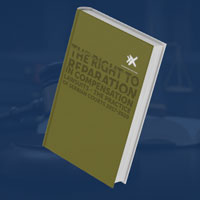
 On the following
 This is the seventh report of the Humanitarian Law Center (HLC) on war crimes trials in Serbia. The HLC has monitored all war crimes trials conducted in the territory of Serbia during 2017 and 2018, a total of 20 trials, conducted by the War Crimes Departments of the Higher Court in Belgrade or the Court of Appeal in Belgrade, including one trial conducted by a court of general jurisdiction. A brief overview of all cases observed, and the HLC’s key findings on each case of interest to the public, are provided in the Report.
 The Humanitarian Law Center (HLC) has been monitoring and providing support to war crimes trials ever since the first war crimes proceedings conducted in Serbia in 2002. The HLC is the only organization that has been continuously monitoring and analysing war crimes trials in Serbia and informing the public at home and abroad about them. It has been representing victims (injured parties) in war crimes cases through an Attorney, filing criminal complaints with the Office of the War Crimes Prosecutors (OWCP) against suspected perpetrators, and sharing its documentation on war crimes. Also, the HLC has been identifying witnesses and victims and encouraging them to give evidence in court and thus contribute towards achieving justice for past crimes.