The Negative Impact the Court of Appeal Judgment in the Skočić Case will Have on War Crimes Trials in Serbia
With regard to the judgment rendered by the Court of Appeal in Belgrade in the case of the crime committed in July 1992 in the town of Skočić near Zvornik, the Humanitarian Law Center (HLC) held a press conference on July 6th, 2018. When deciding upon the appeal, the Court of Appeal in Belgrade upheld the acquittal of members of the „Sima’s Chetniks“ unit for the destruction of a mosque and murder of 27 Roma civilians committed in the village of Skočić in July 1992, but modified the judgment in the case of the accused Zoran Alić, Zoran Đurđević and Tomislav Gavrić, finding them guilty of inhumane treatment, violation of physical integrity, sexual humiliation and rape of protected witnesses.



 The Youth Initiative for Human Rights (Initiative) will hold a commemorative gathering for victims of genocide in Srebrenica on Wednesday, July the 11th, in the park next to the Presidency of Serbia, starting at 20.00.
 On June 26, 2018, the Belgrade Court of Appeals issued a verdict confirming the acquittal of members of the “Sima’s Chetniks” unit for the demolition of the mosque and killing of 27 Roma civilians in the village of Skočić (Zvornik, BiH) in July 1992, whilst in relation to the accused Zoran Alić, Zoran Đurđević and Tomislav Gavrić, the Court changed the previous verdict, and sentenced them to prison for rape and inhuman treatment of the three injured parties, protected witnesses.


 Since the end of the conflict in the former Yugoslavia, just enough years have passed for children born after the wars to became legal aged and to begin thinking about the world around them. In the meantime, each society in which they grew up has built a narrative of the wars in the past in the former Yugoslavia. Will these young persons’ – just until yesterday merely children – parents, professors, media or politicians teach them that the only, or at least the most numeous, victims of past wars were Croats, Bosniaks, Albanians or Serbs depending solely on the environment in which they were born?
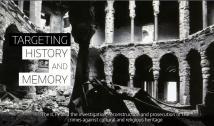 In the period 2016-2018, the Humanitarian Law Center (HLC) participated in the implementation of the project “Targeting History and Memory”, supported by the EU Programme, “Europe for Citizens”. Together with the HLC, the partners in the implementation of this project were the Center for Dealing with the Past (Documenta) from Croatia, the History Museum of BH, and Europa Nostra from the Netherlands, with the SENSE Center for Transitional Justice from Croatia taking the lead.