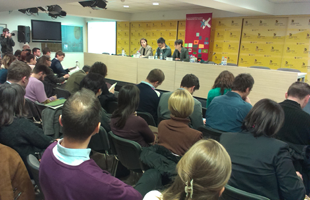
“General Diković and 37th Brigade in Kosovo” Film

 Approximately 1,400 civilians were killed in the area of responsibility of the 37th Brigade of the Yugoslav Army in Kosovo in 1999. The mortal remains of a number of victims were discovered in mass graves in Serbia. The present Chief of General Staff of the Serbian Army, Ljubiša Diković, was the Commander of the Brigade at this time. Neither he nor any members of his unit have been held accountable for these crimes.
The evidence showing the presence and the role of the Yugoslav Army in the mass killings of civilians in Izbica, Čirez, Savarine, Rezala and other villages in the Drenica region is presented in the film titled “Ljubiša Diković and the 37th Brigade in Kosovo”, made by the Humanitarian Law Center. This evidence has already been presented in the “Ljubiša Diković” and “Rudnica” Dossiers.
A number of TV services in Serbia, including the public broadcasters Radio and Television of Serbia and Radio and Television of Vojvodina, have refused or have not responded to the request that they screen the film. For this reason, the film will be posted on the HLC’s webpage and youtube channel on Tuesday, February 21st at 11:00 a.m.

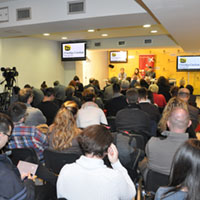
 On Tuesday, January 31st, 2017, the HLC presented its eighth dossier in a row about unprosecuted crimes and possiblel perpetrators. The Dossier “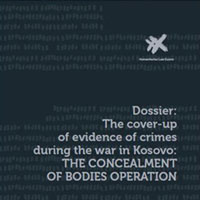
 Since 2001, mass graves containing the bodies of 941 Kosovo Albanians, mainly civilians killed outside combat situations in Kosovo during 1999, have been found on four locations in Serbia. 744 bodies of Kosovo Albanians have been discovered in Batajnica, on the outskirts of Belgrade, at least 61 in Petrovo Selo, and 84 at Lake Perućac. At least 52 bodies have been subsequently found in the mass grave at Rudnica.
 On December 22nd, 2016, the Humanitarian Law Center (HLC) presented its sixth dossier in a row on possible perpetrators of war crimes committed during the armed conflicts in the former Yugoslavia. The “
 After capturing Žepa in late July 1995 approximately 800 Bosniaks from Žepa crossed the River Drina and entered the territory of the Republic of Serbia, frightened for their lives after rumours had spread of the crimes committed by the Army of Republika Srpska in Srebrenica. Most of them were members of the Army of BiH, but there were also civilians, including dozens of underage boys. Almost immediately after crossing, the men were taken captive by border guards of the Yugoslav Army and members of Special Police Units.





 The Office of the War Crimes Prosecutor (OWCP)